How to get rid of termites
How to get rid of termites comes down to three jobs: find where they are, treat the colony and protect the building afterwards. For most homes, that means a licensed pest manager. CSIRO says successful control of a termite colony usually needs one, and the WA Government says to avoid household sprays, which can disturb the termites.
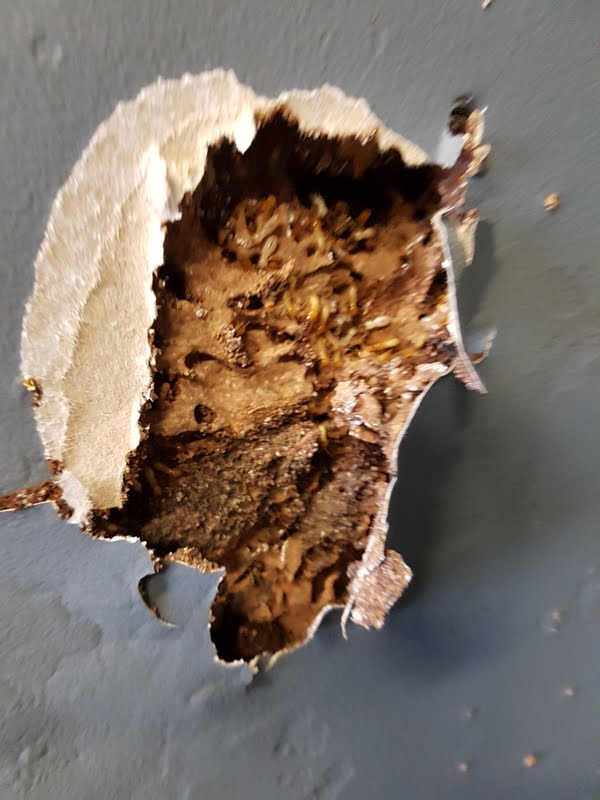
This guide explains what works, what doesn't and where DIY falls short. If you've found termites, don't disturb them. Book a free assessment and we'll tell you what you're dealing with.
Can you get rid of termites yourself?
You can buy termite products from shops and online. But there are good reasons DIY often falls short.
CSIRO says home owners can buy termite control products, but care must be taken in applying them so termites aren't disturbed and driven away temporarily. The WA Government says that if you find termites, you shouldn't disturb them by using household sprays or removing infested wood.
Here's where DIY tends to go wrong:
You treat what you can see.
The visible termites are only a small part of a colony that can number around 200,000, and the nest may be many metres away.
Termites move.
Disturbing them can send them to another part of the building, where they're harder to find.
Treating tunnels alone isn't enough.
The WA Government says treatment directly into the tunnels where termites are active can reduce numbers, but it rarely eliminates the colony unless it's combined with another method.
No lasting protection.
CSIRO says most methods provide no lasting protection against reinfestation by other colonies.
Hidden activity.
Without inspection tools, it's hard to know whether you've dealt with all the activity.
How to get rid of termites: the professional approach
The WA Government describes treatment of an existing building as an integrated approach:
- Kill the termites in the timber.
- Locate and destroy the nest.
- Re-establish chemical or physical barriers.
- Carry out regular inspections to detect ongoing or new activity.
It adds that for existing buildings where termites have already been found, chemical treatment is usually the only option for destroying the nest. A licensed pest manager inspects first, finds the activity and recommends the method that suits your property.
Read how it works in how we treat termites, or see all of our termite treatment options.
Termite treatment methods
CSIRO lists the common ways insecticide is applied. A pest manager may use one or combine several.
Soil treatment
The soil around slabs, stumps and footings is trenched and treated, or treated through a reticulation system under the slab. Where there's paving and no reticulation, problem areas can be drilled and injected. This creates a chemical barrier. See chemical soil treatment.
Baiting
Bait stations or lures are placed against infested wood, near active tubes, or partly buried in the soil around the building. Termites feed on a slow-acting bait and carry it back to the colony. CSIRO says baits should be checked every few weeks. The WA Government says about 30 bait stations are needed for a typical house and they need regular inspection. See termite baiting.
Dusting and foaming
Insecticidal dust or foam is applied directly to termites or into their galleries and voids, so they pick it up and spread it through the colony. See termite dusting and foaming.
Fumigation
CSIRO says extensive infestations of drywood termites that can't be eradicated by local dust or foam may need the building tented and fumigated. Drywood termites are more common in humid tropical and subtropical areas.
Not sure which method suits you? Read termite barrier or baiting: which is better?.
How long does it take?
It depends on the method, the species and the size of the infestation. Treatments that act on termites directly, such as dust and foam, work on the activity you can reach. Baiting is slow by design, because the bait has to be carried back to the colony, and it's checked over time.
Your technician can give you a realistic time frame after the inspection. Be wary of anyone promising an instant fix for a hidden colony.
Are there environmentally friendly options?
The WA Government notes that there are environmentally friendly methods of control available through some pest controllers, but they may not always be as effective as the physical barriers described in its fact sheet. If this matters to you, ask your pest manager what's available for your situation and what they'd recommend.
What to do first if you find termites
- Don't disturb them. Don't spray, and don't remove infested timber.
- Photograph the activity and note the location and date.
- Leave tubes and damaged timber in place.
- Call a licensed pest manager for an inspection.
After treatment: stopping termites coming back
Treating the colony isn't the end of the job. Termites can arrive from other colonies, and barriers can be disturbed or wear out.
Regular inspections.
The WA Government recommends a licensed pest controller inspect at least once a year. CSIRO also says at least annually.
Fix moisture problems.
Repair leaks and drainage, and keep subfloor vents clear.
Keep timber off the soil.
Remove dead trees and stumps, and keep firewood away from the house.
Protect the building.
Barriers and monitoring can reduce the risk. See termite prevention and termite monitoring.
How much does it cost?
The price depends on the size and construction of your home, how easy it is to access, the method and what the inspection finds. We quote after assessing your property. Read what affects the cost of termite treatment.
Next steps
If you're wondering how to get rid of termites at your property, start with an inspection. Book a free termite assessment or call (08) 6103 5084. We service 24 council areas across Perth and surrounding WA: find your area.
Questions about getting rid of termites
Can termites come back after treatment?
Yes. CSIRO says most methods provide no lasting protection against reinfestation by other colonies, so regular inspections are needed.
Do I need a licensed pest manager?
CSIRO says successful control usually requires a licensed pest manager. In Western Australia, the Department of Health regulates pest management technicians and businesses.
Can I treat termites with household spray?
We don't recommend it. The WA Government says not to use household sprays on termites in your home, because it can disturb them. A pest manager can advise on a method that suits the situation.
How do I know the termites are gone?
Ask your technician how they'll confirm it. Follow-up inspections, and for baiting, checks of the bait stations, show whether activity continues. Ongoing annual inspections catch new activity.
What kills termites?
Professional treatments use termite insecticides applied as soil barriers, baits, dusts or foams, often in combination. The method depends on the species, where the activity is and the building. See termites in Australia.
Sources
- CSIRO, Managing Termites: Understanding termites and reducing their risk to buildings (2021).
- Government of Western Australia, Termites and your home (fact sheet).
- Government of Western Australia, Department of Health: pest industry licensing and registration.
Think you have termites?
Book a free assessment, or call (08) 6103 5084 and tell us what you have seen.
Book a free assessment Call now