Termite dusting and foaming
Termite dusting puts an insecticidal dust directly onto termites or into their galleries, so they pick it up and spread it through the colony. Foaming applies insecticide as a foam into wall cavities and voids. Both are targeted treatments for areas of active termites.
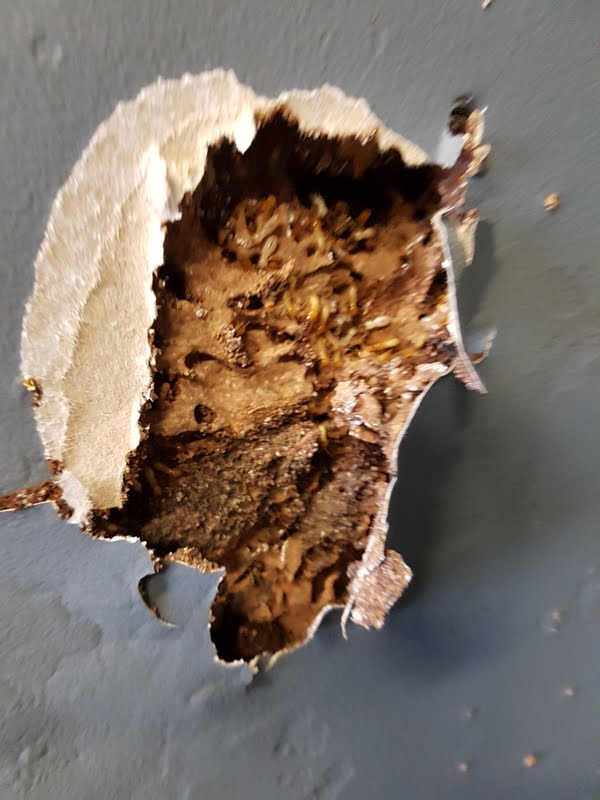
CSIRO lists dusting among the common ways insecticide is applied to control termite colonies. This page explains how dust and foam are used and where they fit.
How termite dusting works
CSIRO says insecticidal dust is applied directly to the termites or puffed inside their galleries, so they pick it up on their moist bodies. Termites ingest the dust while grooming and then spread it throughout the colony.
Dusting works where a technician can reach active termites, such as an open gallery or tube. It's a way to deliver treatment to termites the technician can see and get to.
How termite foaming works
CSIRO describes foam as a way to apply insecticide to infestations in places a spray can't reach, such as voids in timber or walls. Foam spreads inside a cavity so the insecticide reaches more surface than a liquid would. Foaming is used for localised activity, such as a wall void or door frame, rather than treating an entire perimeter.
Where dusting and foaming are used
- Active mud tubes and galleries a technician can open
- Termite activity inside wall cavities, frames and similar voids
- Localised damage, such as a termite-affected door frame
- As part of a wider treatment, alongside baiting or soil treatment
Limits of dusting and foaming
The WA Government says treatment with a termicide directly into tunnels where termites are active can reduce numbers, but it rarely eliminates the colony unless it's used with another method. CSIRO also says most methods provide no lasting protection against reinfestation by other colonies.
That's why these treatments are often combined with termite baiting, termite nest treatment or chemical soil treatment, and followed by regular inspections.
Are dust and foam safe?
Ask your pest manager what product will be used, where, and what precautions apply. Ask to see the label and safety information. Treatments should be done by a licensed pest manager.
What does spot treatment cost?
Dusting and foaming are usually part of a spot treatment. A Perth price guide dated November 2026 lists spot treatment at $260 to $945, with a typical price of about $525. The price depends on the number of points of activity, how far they reach and how much has to be opened up. That's a third-party guide, not our quote. See termite treatment cost.
What to ask before dusting or foaming
- Where is the activity, and can all of it be reached?
- Will the treatment be combined with another method?
- What product is used, and what precautions apply?
- What follow-up checks are included?
Termite dusting in Perth
We service 24 council areas across Perth and surrounding WA. See termite treatment in Perth or find your area.
Dusting and foaming don't replace regular inspections. CSIRO says most methods give no lasting protection against reinfestation by other colonies, so the WA Government's and CSIRO's recommendation of at least one inspection a year still applies.
Ask about termite dusting
Book a free assessment or call (08) 6103 5084. We'll inspect and explain which treatment suits the activity you have. Read more about termite treatment.
Questions about termite dusting and foaming
Does termite dusting kill the whole colony?
Not on its own, in most cases. The WA Government says direct treatment of tunnels rarely eliminates the colony unless combined with another method.
Is foaming the same as dusting?
No. Dust is applied to termites or galleries. Foam fills voids and cavities. Which is used depends on where the activity is.
Can I use dust or foam myself?
Home products exist, but care is needed. CSIRO says home application can disturb termites and drive them away temporarily. See how to get rid of termites.
Will I need more treatment afterwards?
Often. Dusting and foaming deal with the activity that can be reached, and a barrier, baits or nest treatment may be needed to deal with the colony and protect the building.
Sources
- CSIRO, Managing Termites: Understanding termites and reducing their risk to buildings (2021).
- Government of Western Australia, Termites and your home (fact sheet).
- What's The Damage?, Pest control prices Perth 2026 (pricing verified 1 November 2026).
Think you have termites?
Book a free assessment, or call (08) 6103 5084 and tell us what you have seen.
Book a free assessment Call now