Termites in Australia: what they are and what they do
Termites are small, social insects that feed on timber and other plant material. Australia has more than 350 species, and about 20 of them cause significant damage to buildings. Most of that damage comes from subterranean termites, which live in colonies in the soil or in trees and tunnel to reach timber.
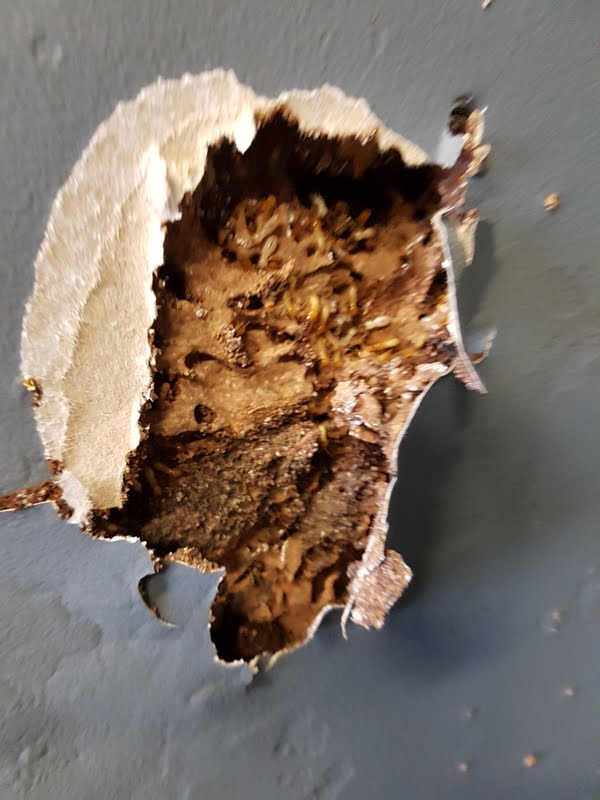
This guide explains how termites live, how they get into homes, what attracts them and what to do if you find them. It's written for Australian homeowners, with notes for Perth and Western Australia.
What are termites?
Termites are insects that eat cellulose, the main material in wood, paper and other plant matter. In the wild they're useful. They recycle dead trees and plant litter back into the soil.
The trouble starts when the plant material is your house. The WA Government's fact sheet puts it plainly: the wood in buildings and structures such as pergolas is as appetising to termites as a dead tree.
Termites are often called white ants, but they aren't ants. CSIRO says they're more closely related to cockroaches. To spot the differences, see what termites look like.
How a termite colony works
Termites live in colonies with defined roles, called castes.
Workers
leave the nest to find food. They feed the other members of the colony.
Soldiers
protect the workers and defend the tunnels leading to the nest.
The queen and king
produce the other termites, including the reproductive adults.
Alates
are winged reproductive males and females. They leave the nest in swarms to start new colonies.
Colonies can be large. The WA Government says colonies of the species that damage buildings can reach 200,000 termites, with nests sometimes seven metres below the surface, and tunnel networks that can extend up to 100 metres from the nest. CSIRO says foraging termites usually stay within about 30 metres of the nest, but occasionally travel 100 metres or more.
The nest is often not where the damage is. You can find termites in your house with the colony living in a tree stump, in the soil or in a tree some distance away. Read about termite nests and where they hide.
How big is the termite risk in Australia?
Termites are found throughout Australia, but the species vary from place to place. CSIRO says the risk of termite attack on the mainland generally increases going north, with the highest risk in the subtropics and tropics. Above the Tropic of Capricorn, the giant northern termite is a particularly voracious species.
Most states and territories have a moderate to very high risk of attack. Some areas around Melbourne have a low risk, and Tasmania is the only state with a negligible risk. CSIRO adds that environmental changes may shift termite distribution in the future, so it's sensible to reduce risk in buildings everywhere.
Subterranean and drywood termites
CSIRO groups most termites into two types by how they nest and feed.
Subterranean termites are the type most commonly found in Australia and are responsible for most structural damage. They usually need a connection to the soil for moisture. They can nest underground, inside trees, stumps, logs or roots, in damp spots inside buildings, or in mounds. To travel over concrete, brick and other materials without drying out, they build shelter tubes. See termite mud tubes.
Drywood termites don't need soil. They get enough moisture from the wood they eat, and they hollow out cavities inside it. They leave small piles of gritty droppings called frass. CSIRO says drywood termites are more common in humid tropical and subtropical areas of Queensland and New South Wales.
Because subterranean termites are the type most commonly found across Australia, they're the likeliest culprit for a Perth home, but only an inspection can tell you what's actually in your property.
How termites get into a home
Termites look for timber, moisture and a hidden path. They can use gaps in slabs, joins and cracks, pipes and conduits, timber touching the ground, and even tubes built over a barrier to bridge it.
Subterranean termites travel from the nest through soil and through shelter tubes. CSIRO notes that termites may also seal small gaps and crevices in timber with the same crumbly material they use for the tubes.
That's why barriers are only part of the answer. CSIRO says barriers can be affected by renovations, garden changes, slab movement and the wearing off of chemicals, so regular inspections are needed.
Termite barriers and termite-resistant materials
Termite risk can be reduced when a building is designed and built. CSIRO says materials such as preservative-treated timber, naturally resistant timber, metals, masonry and concrete limit the food available to termites. Jarrah, a Western Australian timber, is among the species CSIRO lists as having termite-resistant heartwood. Resistant isn't the same as immune, and it doesn't replace inspections.
Barriers are physical or chemical, and are often used together:
- Physical barriers: metal shields, fine stainless steel mesh, and graded stone or granite chips that termites can't carry or squeeze through.
- Chemical barriers: a soil treatment around and under the building. CSIRO says most insecticides will provide at least three to five years of protection, and a reticulation system under a slab lets the soil be re-treated without digging it up.
Barriers can fail if they're disturbed, so renovations and extensions shouldn't remove them or block access for inspection.
What attracts termites
The WA Government's checklist lists the things to watch for:
- Plumbing, drainage and roof leaks, because damp conditions attract termites
- Garden beds and plants against external walls (hard paving is better)
- Soil from garden beds blocking drainage or ventilation openings
- Things stored against external walls
- Poor ventilation under the floor
- Firewood or stacked timber near the house
- Dead trees and stumps
- Untreated timber sleepers in retaining walls and garden beds
- Timber decking around verandahs and pools that isn't cleaned and inspected
Our termite prevention guide explains each one.
Why termites damage homes without you noticing
Termites usually stay hidden. They eat timber from the inside out and often leave a thin outer layer, so the surface can look fine while the inside is hollowed out. CSIRO says this layer may be wafer thin because termites keep it to avoid drying out.
That's why professionals recommend regular inspections. The WA Government advises hiring a licensed pest controller to inspect all accessible timber and likely entry points every six to 12 months, and a licensed operator at least once a year.
Signs of termites
The first sign is often a thin mud tunnel on timber. Other signs are timber that sounds hollow, damaged skirting or door and window frames, discoloured or warped wall surfaces, damp patches and winged termites or discarded wings. See our full guide to the signs of termites, and read about flying termites and swarms.
What to do if you find termites
Don't disturb them. The WA Government says not to use household sprays or remove infested wood. Take time to find out the size and nature of the problem before you decide how to deal with it.
Then:
- Photograph what you've found from a safe distance.
- Leave tubes and damaged timber where they are.
- Book an inspection with a licensed pest manager.
Our what to do if you find termites guide has more detail. Or book a free assessment and we'll come and look.
How termites are treated
The WA Government describes treatment of an existing building as an integrated approach: killing the termites in the timber, locating and destroying the nest, re-establishing barriers and keeping up regular inspections.
CSIRO lists the common ways insecticide is applied:
Soil treatment
trenching and spraying the soil around slabs, stumps and footings, or treating through a reticulation system. See chemical soil treatment.
Baiting
bait stations containing a slow-acting insecticide that termites carry back to the colony. See termite baiting.
Dusting and foaming
insecticide applied directly to termites or into their galleries and wall voids. See termite dusting and foaming.
Fumigation
used for extensive drywood infestations.
CSIRO adds that most of these methods give no lasting protection against new colonies, so inspections at least once a year are needed. Not sure which to choose? Read termite barrier or baiting: which is better?.
Termites in Perth and Western Australia
In Western Australia, the Department of Health regulates pest management technicians and businesses. Termite work should be done by a registered business with licensed technicians. We service 24 council areas across Perth and surrounding WA: find your area.
Two WA specifics are worth knowing:
- Buying a home: Consumer Protection WA recommends including a White Ant Certificate clause in the Offer and Acceptance form. Read about a pre-purchase termite inspection.
- New homes: the National Construction Code requires termite risk management when building, and the WA Government says a durable notice must be fixed in a prominent place, such as the meter box, showing the type of system, the date it was installed and the recommended inspection frequency.
Get a termite assessment
Termites rarely announce themselves. If you've seen something that might be termites, or you haven't had an inspection in a while, book a free assessment or call (08) 6103 5084.
Questions about termites
What do termites eat?
Termites eat cellulose, found in timber, paper, cardboard and other plant material. In nature they feed on dead trees and plant litter.
What kills termites?
Professional treatments use termite insecticides applied as soil barriers, baits, dusts or foams, often in combination. CSIRO notes that DIY products need care because they can disturb termites and drive them away temporarily. A licensed pest manager can find the activity and recommend a method.
What is a termite's worst enemy?
In nature, ants are a common predator. CSIRO notes that soldier termites defend the tunnels leading to the nest from predators such as ants. Ants aren't a treatment for a home, though.
Can you ever get rid of termites completely?
Treatment can deal with an active colony, but new termites can arrive from other colonies. That's why treatment is followed by protection and regular inspections.
How often should I have a termite inspection?
The WA Government recommends a licensed pest control operator inspect at least once a year. You can read more about termite inspections.
How much does termite treatment cost?
It depends on the property, the method and what an inspection finds. See what affects the cost of termite treatment.
Sources
- CSIRO, Managing Termites: Understanding termites and reducing their risk to buildings (2021).
- Government of Western Australia, Termites and your home (fact sheet).
- Government of Western Australia, Department of Health: pest industry licensing and registration.
Think you have termites?
Book a free assessment, or call (08) 6103 5084 and tell us what you have seen.
Book a free assessment Call now