Termite nests: where they are and how to find them
A termite nest is the home of the colony, where the queen and king live and where the workers and soldiers return to. It's often well away from the damage you can see. For subterranean termites, the most common type in Australia, the nest may be underground, in a tree stump, or in a tree some distance from your house.
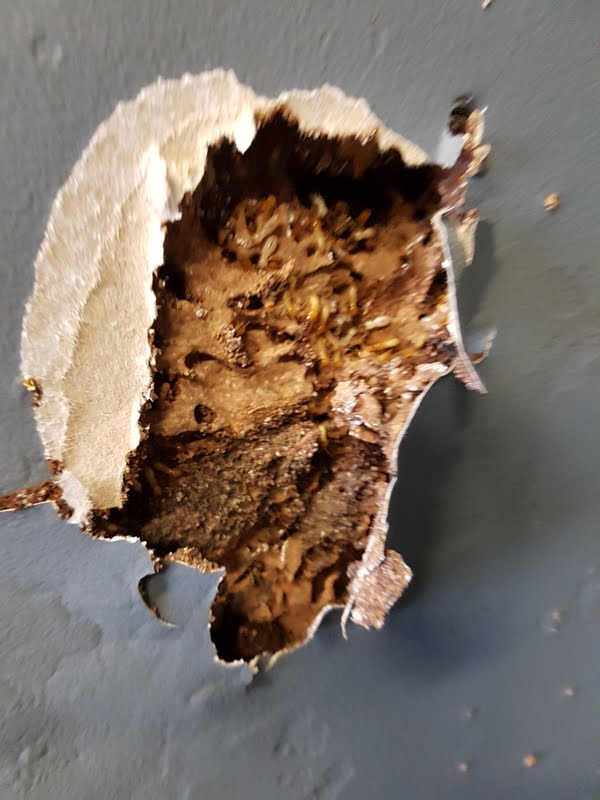
This guide explains where a termite nest can be, why it's hard to find and what to do about it. If you think you've found one, don't disturb it. Book a free assessment and we'll take a look.
What is a termite nest?
A termite nest is the central base of a colony. It houses the queen and king, who produce the other termites, and it's the place workers feed and soldiers defend.
Colonies can be big. The WA Government says the termite species that damage buildings live in colonies of around 200,000, with nests sometimes as deep as seven metres below the soil surface. Their tunnel networks can extend up to 100 metres from the nest.
Where do termites build nests?
CSIRO describes several places subterranean termites may nest:
- Underground
- Inside trees, stumps, logs or roots
- In damp locations inside buildings
- As large mounds on the ground or on trees
Most termites in Australia nest in or near the soil. Termites that nest inside a building usually need a source of moisture, such as a leak.
Why you often can't see a termite nest
Termites hide. They keep their soft bodies out of sunlight and dry air by working in tunnels and shelter tubes. Workers usually forage within about 30 metres of the nest, although CSIRO says they occasionally travel 100 metres or more.
That's why damage in one part of your home doesn't tell you where the colony lives. CSIRO notes that the nest may be outside, many metres away. In many cases the nest is under the ground, in a neighbour's garden or in a tree.
Read about the shelter tubes that give termites away in termite mud tubes.
How is a termite nest found?
Finding the nest takes patience and the right tools. CSIRO says professionals may use lures and bait stations, sound or movement detectors, thermal cameras and sniffer dogs. Several control options rely on finding active termites.
The WA Government adds that in a garden, specialised pest managers drill into wood or the trunk of a tree and insert temperature probes to help locate the termite nest.
Other clues include:
- Where tubes appear and which direction they lead
- Where flying termites emerge. See flying termites and swarms.
- Damaged timber outside, such as stumps, fence posts and sleepers
- Damp areas around the building
Every property is different, so a technician decides which methods suit it. Ask us which approach we'd use on your home.
Why treating the nest matters
Treating only the termites you can see rarely solves the problem. The WA Government says treating an existing building takes an integrated approach: killing the termites in the timber, locating and destroying the nest, re-establishing chemical or physical barriers, and carrying out regular inspections.
It also says that for existing buildings where termites have already been found, chemical treatment is usually the only option for destroying the nest. Treating directly into the tunnels where termites are active can reduce numbers, but it rarely eliminates the colony unless it's used with another method.
See termite nest treatment for how this is done, and termite baiting for the method that sends a slow-acting bait back to the colony.
Can you remove a termite nest yourself?
We don't recommend it. Digging into a nest, pouring chemicals on it or breaking open infested wood can disturb the termites and push them to a new spot. The WA Government says not to use household sprays or remove infested wood. CSIRO says home owners can buy termite products, but care is needed to avoid disturbing the termites and driving them away for a time.
Successful control usually needs a licensed pest manager. Read how to get rid of termites to see where DIY falls short.
A nest in your garden isn't always a problem for the house
CSIRO notes that termites in the garden don't necessarily enter the house, and not all termite species are structural pests. A nest in a stump or tree is still worth having checked, because it may be linked to activity in the house.
The WA Government suggests removing dead trees and stumps as soon as possible, keeping firewood and stacked timber well away from the house, and avoiding untreated timber sleepers in retaining walls and garden beds. See our termite prevention guide.
Next steps
If you think you've found a termite nest, leave it alone and call us on (08) 6103 5084, or book a free assessment. We'll inspect the property and explain the options. We service 24 council areas across Perth and surrounding WA: find your area.
Questions about termite nests
How big is a termite nest?
It varies. The WA Government says colonies of building-damaging termites can have around 200,000 members, with nests sometimes seven metres below the soil surface.
Can a termite nest be inside a house?
Yes, in some cases. CSIRO lists damp locations inside buildings as a place termites may nest. Most nests, however, are in the ground or in trees and stumps.
How far is a termite nest from the house?
It can be anywhere from beside the building to many metres away. Foraging termites usually stay within about 30 metres, and occasionally go 100 metres or more.
How do I know if a termite nest is active?
You can't tell by looking. Live termites in tubes or timber point to activity, but a technician has to check. Don't poke at it.
Will treating the nest stop termites coming back?
Treating the nest deals with that colony. CSIRO says most treatments don't give lasting protection against new colonies, so regular inspections at least once a year are needed.
Sources
- CSIRO, Managing Termites: Understanding termites and reducing their risk to buildings (2021).
- Government of Western Australia, Termites and your home (fact sheet).
Think you have termites?
Book a free assessment, or call (08) 6103 5084 and tell us what you have seen.
Book a free assessment Call now