Signs of termites in your home
The most common signs of termites are thin mud tunnels on walls, stumps or foundations, timber that sounds hollow when tapped, and damaged skirting boards or door and window frames. Discoloured or warped wall surfaces, damp patches and discarded wings can also point to termites.
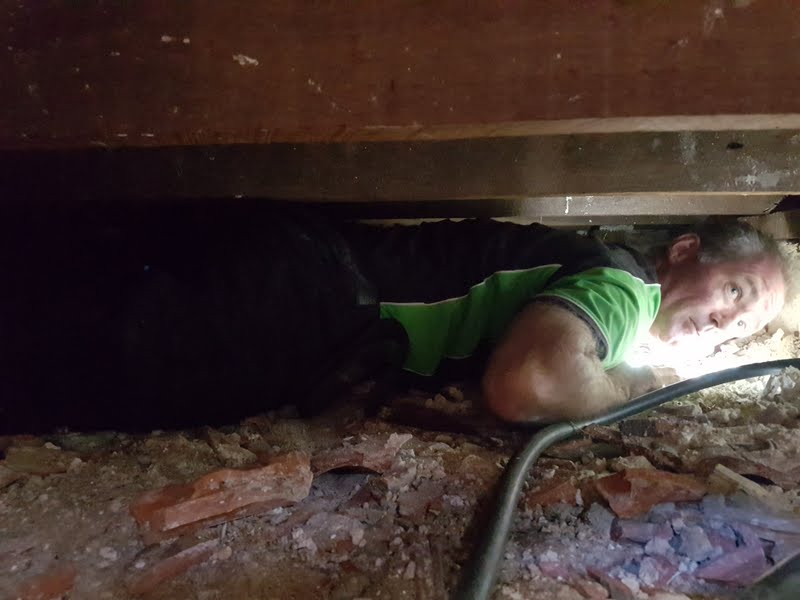
Termites often work out of sight, so the first sign may be small. This guide covers each one, what it means and what to do. If you've seen something that fits, book a free assessment and we'll take a look.
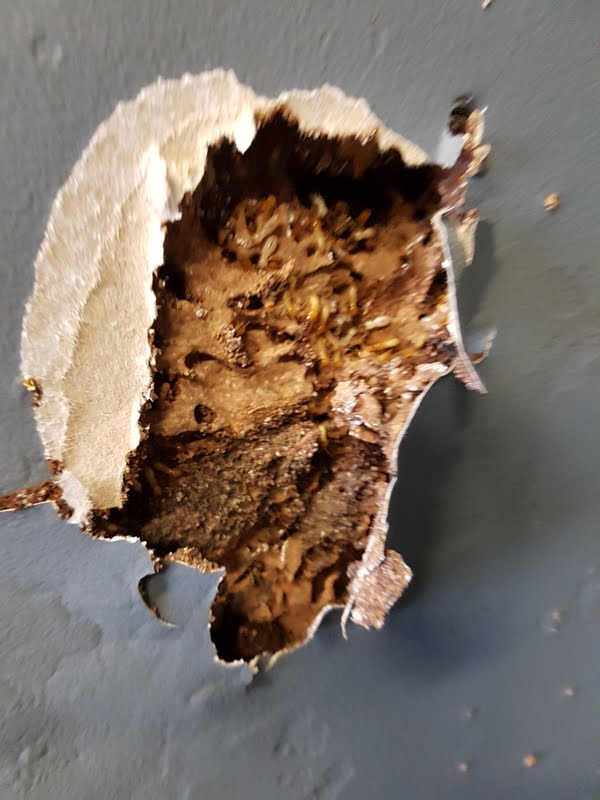
1. Mud tubes
Subterranean termites build shelter tubes to travel between the nest and their food without drying out. The WA Government says the first sign of termites is often a wafer-thin mud tunnel on timber.
CSIRO says to look for tubes over materials termites can't eat, such as stumps, ant caps and the edge of a concrete slab. Most termite attacks start from the soil.
Don't knock the tubes down. Leave them so a technician can see where termites are travelling. Read more about termite mud tubes.
2. Hollow-sounding timber
Termites eat timber from the inside and often leave a thin outer layer. CSIRO suggests tapping timber with a hard-tipped tool, such as a small hammer or screwdriver handle, and listening for a dull, hollow sound that suggests cavities. Probing with a knife or screwdriver can reveal hidden galleries, because the surface may be wafer-thin.
Be gentle if you test it yourself. Poking at an active nest can disturb the termites. If timber sounds hollow, the safer step is to call us rather than break it open.
3. Damaged skirting, door frames and window frames
CSIRO lists skirting boards, door and window frames, posts set into the soil, wardrobes and items in storerooms as places to check for damaged wood. Timber that crumbles, looks layered or has a tunnelled interior is a warning sign. Our termite damage guide shows what to expect.
4. Discoloured or warped walls
In a home, the WA Government says the first indicator may be a slight discolouration of a wall surface, followed by warping if timber panelling lines the wall. Bubbling or rippling paint and plaster can also have other causes, such as leaks, so it's worth getting it checked.
5. Damp areas
Termites need moisture. CSIRO says to look for damp areas, which may appear discoloured or stained, with bathrooms, laundries and places with poor drainage, such as where paving sends water toward the house, being especially vulnerable.
A leak doesn't mean you have termites, but it can make the conditions more attractive to them. Fixing leaks and drainage quickly is one of the simplest ways to reduce your termite risk.
6. Winged termites and discarded wings
In humid weather in the warmer months, often at dusk, winged termites leave the nest in swarms. Seeing them outdoors doesn't prove they're in your house. Seeing them come from inside, or finding piles of shed wings on window sills, may.
CSIRO suggests watching where swarms come from, because the nest may be outside, many metres away. Read flying termites and swarms, and learn to tell them from flying ants in what termites look like.
7. Mud packed into gaps
Termites can seal small gaps and crevices in timber with the same crumbly material they use for tubes. If you see joints or cracks that look packed with soil, treat it as a sign of activity.
8. Droppings that look like fine grit
Drywood termites push small dry pellets called frass out of tiny holes in the timber. CSIRO says frass feels gritty, like sand or ground pepper, and the holes may be as small as 1 mm. CSIRO says drywood termites are more common in humid areas such as tropical and subtropical Queensland and New South Wales, but frass is worth reporting if you find it.
9. Doors and windows that stick
Sticking doors and windows can be a sign of moisture or movement in the frame. They have many causes, including humid weather, so on their own they don't mean termites. If they appear together with other signs on this list, get an inspection.
Signs in the garden and outdoors
Termites often start outside. CSIRO says to probe and inspect garden timber, and it notes that termites in the garden don't necessarily mean they will enter the house. The WA Government suggests removing dead trees and stumps as soon as possible, keeping firewood and stacked timber well away from the house, raised off the ground and covered, and checking timber decking regularly.
Look for tubes on fence posts, stumps and pergola posts, soft or crumbling timber sleepers, and timber that touches the soil. In trees, specialised pest managers can drill into the trunk and use temperature probes to find the nest, so don't try to dig it out yourself.
What to do if you notice a sign
- Don't spray or break anything open. The WA Government says not to use household sprays or remove infested wood, because it can disturb the termites.
- Take photos from a safe distance and note the room, the timber and the date.
- Call a licensed pest manager. Termite signs are hard to confirm by eye.
Book a free assessment or call us on (08) 6103 5084. If you've never had your home inspected, our termite inspection is a good place to start.
Why an annual inspection matters
Termites are good at staying hidden, so you can't rely on signs alone. The WA Government advises owners to check for obvious signs every six months and to arrange an inspection by a licensed pest control operator at least once a year. CSIRO also recommends inspections at least once a year, because treatments don't give lasting protection against new colonies.
Between inspections, walk around the outside of your home every few months, look under the floor where you can reach it safely, and check the places on this list. Write down what you see with the date, so you can show a technician what has changed.
Questions about the signs of termites
How do I know if I have termites?
Look for mud tubes, hollow-sounding timber, damaged skirting or frames, discoloured walls, damp patches and discarded wings. Because termites hide, the only reliable way to confirm is a professional inspection.
Can you hear termites?
You shouldn't rely on it. Sounds in wall cavities and roof voids often have other causes, such as pests like rodents. A professional can check what's behind a noise.
What's the earliest sign of termites?
Often it's a thin mud tunnel on timber, according to the WA Government. In a home, a slight discolouration of a wall can be the first indicator.
Are termites a problem in Perth?
Termites are found throughout Australia, and CSIRO says most states and territories have a moderate to very high risk of termite attack. A local inspection is the way to find out what's affecting your property. See where we work.
Sources
- CSIRO, Managing Termites: Understanding termites and reducing their risk to buildings (2021).
- Government of Western Australia, Termites and your home (fact sheet).
Think you have termites?
Book a free assessment, or call (08) 6103 5084 and tell us what you have seen.
Book a free assessment Call now